Wednesday, 23 February 2011

Samsung Develops DRAM With Up To 12.8GB/sec Data Transfer Rates


Times are sure changing as well as technology.  We’ve gone from 3G to 4G, GSM to UMTS, Edge to 3G and then HSPA+, single-core to dual-core processors and the list just keeps going on.  Well, with the next gen Galaxy Tablet in mind, Samsung is continuing the tradition of innovation by introducing their new line of memory modules.  Dynamic random-access memory (DRAM) is improving more and more on a daily basis.  With this new module, Samsung has developed a 1GB DRAM module with a wide I/O interface capable of interacting with both tablets and smart phones, transmitting data at 12.8 GB/sec.  That is music to our ears.

Here’s to the greatest words ever spoken, “faster is better”.  Compared to the LPDDR2 DRAM chip set, this is an eightfold increase in bandwidth.
 Samsung has also trimmed power consumption by 87 percent while successfully doing this.  This is extremely impressive and something to look forward to as new and innovative handsets and tablets join the market by Samsung.  Samsung increased data transfer rates by using a new wide I/O DRAM which encompasses a 512 pin system, much larger than the 32 pin set used in previous chips. 

 The folks over at Engadget have reported that Samsung hopes to provide 20nm-class 4GB wide I/O mobile DRAM by the year 2013.  Here’s to hoping the technology reaches new mobile products much much sooner than that.  As the technology begins to unfold more, we’ll definitely be reporting it back for you all, so don’t forget to check back in with Talk Android.  What do you think?  Is an attainable 12.8 GB/sec fast enough for you?

Monday, 21 February 2011

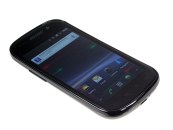
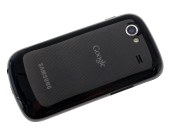
Samsung Google Nexus S review: Royal droid

Introduction

Another year, another heir to the Droid throne – and Google are trying to be democratic about it. Which is a roundabout way of saying they’re not monogamous. For the Nexus One, Google teamed up with HTC. This time around, they trusted Samsung to do the job, using the Galaxy S as a base.
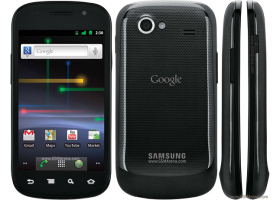
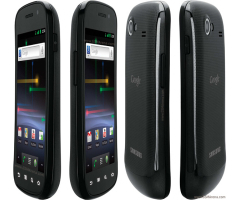
Google Nexus S official photos
It’s only their second try and users are given a second chance to like the Royal Droid. A tall task it is – the very concept is fundamentally incompatible with the free and open source Android system. Royal blood is not a benefit in a free democracy. Google did learn it the hard way with the Nexus One.
Google’s second smartphone child has more than just an image problem to tackle. The Samsung Google Nexus S has to keep pace with the evolution of the platform. The “S” in the name may stand for many things – from second to superior. But with Android 2.3 Gingerbread inside, speed is not far from the truth either. Here’s what else the Nexus S has to offer in a nutshell.

Key features:

  • Quad-band GSM and tri-band 3G support
  • HSDPA, 7.2 Mbps; HSUPA, 5.76 Mbps
  • 4.0" WVGA (480x800) Super AMOLED Contour Display with curved glass screen
  • Android OS, v2.3 Gingerbread
  • 1 GHz ARM Cortex-A8 (Hummingbird) processor
  • 16GB storage, 512 MB RAM
  • 5 MP autofocus camera with LED flash and geotagging
  • Front-facing VGA camera
  • Wi-Fi b/g/n with DLNA
  • GPS with A-GPS
  • Portable Wi-Fi hotspot and stereo Bluetooth v2.1
  • Near Field Communication chip
  • Accelerometer, proximity and light sensors
  • Standard 3.5 mm audio jack
  • microUSB port (charging)
  • Adobe Flash support out of the box
  • Latest Google Mobile apps

Main disadvantages:

  • No microSD slot
  • No 720p video recording
  • All-plastic body, fingerprint magnet
  • No DivX and XviD support (no actual video player) out of the box
  • No dedicated camera key and no lens cover
  • No FM radio
  • No smart dialing
  • Overly expensive for its feature set
As you can see, the Nexus S shares a lot of the Samsung Galaxy S components. Powered by the very same 1Ghz Hummingbird processor and having the same 512MB of RAM, it feels a bit quicker probably thanks to Gingerbread.
The fact aside that our review isn’t exactly on time, this hardware is so 2010, while the imaging department is surely from 2009. We wouldn’t fuss about it was it not for the Tegra 2 SoC and its 1080p video recording, which has the power to be the next big thing in the industry. The emphasis here being on next. Maybe Google should’ve thought of that and instead of rushing to release the Nexus S.
If they chose to wait a couple of months, a dual-core CPU could’ve made a lot of difference – especially with Gingerbread. The Nexus S would have been a beast just like its predecessor was, with the first droid powered by a 1Ghz processor on the market. With this hardware, the Nexus S is no more than an overclocked Nexus One.
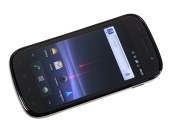
Google Nexus S Google Nexus S Google Nexus S
Google Nexus S live shots
But wait a minute – maybe not all is lost and the Nexus S will be salvaged by the software. Not only is it the first Gingerbread-powered phone to the market – it can also count on special treatment in terms of getting updates on time.
Anyway, when you have a second try at something the results are supposed to be better. Just like when parents raise a second child differently having learned from their past experience. Stick around to find out if the Google Nexus S is the definitive, all-muscle replacement of the Nexus One we’ve all been waiting for.

Saturday, 19 February 2011

Sony Ericsson brings 16-megapixel Cyber-shot S006 cell phone to KDDI


kddi-cybershot-sony-ericsson-16megapixel

KDDI has recently announced its greatest news and it is doing best to bury itself amongst so many other phones that has been announced. The new phone is by Sony that is 16.4-mega pixel CMOS sensor and we would not just slip by it. Sony has managed to slip inside the ordinary looking camera and stuff it with CMOS sensor in cyber shot Soo6 cell phone. There are many others in built features provided by Sony in this device.
16-mega pixel Cyber shot Soo6cell phone features
Apart from 16 mega pixels for camera feature, this device has many useful specifications. It includes a setting of ISO settings that is up to ISO 128oo. Other features are also not very shabby and it includes great processor to carry out all work in good manner. It has 1GHz snapdragon processor with 3.3-inch screen. The screen is said to be VGA and built in Wi-Fi. It also has a Bluetooth and GPS. Camera is good but it may not be able to deliver very good performance that can be compared to the DSLR but it will surely give a better imaging experience.
Cyber shot Soo6 phone review
A new phone that has been announced by Sony from KDDI is expected to have good sale. This is because of the great features that it includes within it. Performance in image capturing is just too good. It has 16.2-mega pixel CMOS sensor that helps in great captivating power. It has a processor that makes it run faster in comparison with other models. It includes good connectivity options and that makes it stand apart from others. This is a good option for VGA resolution as it gives you good clarity with perfect features. The Sony has revealed not much but it would be surely very different from all other models.
Cyber shot Soo6 phone price and availability
It is expected that this new cyber shot S006 phone would be revealed in 2011. Not many specifications have been made for exact date. However, 2011 would see the great grand release of this phone. The device would be initially released in Japanese markets and the rest of the world would have to wait for some more time to get a glimpse of this new release. This is surely a stylish phone with great features built in it. Not much but at least from the pictures, we can guess some basic features it would be having. Regarding the price too, not much have been heard about cyber shot Soo6 phone price. It is expected to be for high users who can afford to get this phone with 16.2 mega pixel.
Getting this new Sony camera phone would be great, as it will give you good captivating power to capture all family and friends moments easily in your device. Sony is a name that brings people together and builds healthy relationship with customers with their great products.

Friday, 11 February 2011

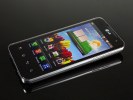
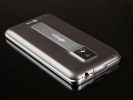
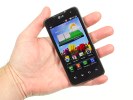
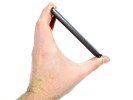
LG Optimus 2X


Introduction

Surely 2011 will be remembered as the year that dual-core CPUs made their smartphone breakthrough. Here we have the LG Optimus 2X pioneer and we are rushing to give you a preview of what dual-core CPU has to offer to you today.

LG Optimus 2X official photos
It’s not one of our typical previews you will be seeing here – we are just going to focus on the performance of the Optimus 2X and hopefully, the Tegra 2 platform it pioneers. Normally, we avoid getting into details about the performance of non-retail units, but this one is so good that it will almost be unfair to save the praise.

But let’s first have a look at the key features of the LG Optimus 2X:

  • General: Quad-band GSM/GPRS/EDGE support; 3G with HSPA
  • Form factor: Touchscreen bar phone
  • Dimensions: 123.9 x 63.2 x 10.9 mm, 139 g
  • Display: 4" 16M-color TFT LCD capacitive touchscreen, 480 x 800 pixels
  • Platform: Dual-core 1GHz ARM Cortex-A9 proccessor, Ultra Low Power GeForce GPU, Tegra 2 chipset
  • OS: Android 2.2 (Froyo)
  • Memory: 8GB onboard storage, microSD card slot
  • Camera: 8 megapixel auto-focus camera with face detection and touch focus; 1080p video recording @ 24fps and 720p@30fps
  • Connectivity: Wi-Fi 802.11 b/g/n, Bluetooth 2.1 with A2DP, standard microUSB port, GPS receiver with A-GPS, 3.5mm audio jack, micro HDMI port
  • Misc: Adobe Flash 10.1 support, FM radio, accelerometer, proximity sensor, gyroscope, DivX and Xvid video support up to 1080p
It doesn’t take a specialist to recognize that the LG Optimus 2X is the most capable smartphone released to date. You could probably argue whether a Retina screen or a SuperAMOLED aren’t contributing more to the general user experience, but as far as smartphone tasks are concerned, the Tegra 2 is what you would want to have by your side.
LG Optimus 2X LG Optimus 2X LG Optimus 2X LG Optimus 2X
LG Optimus 2X at ours
Of course, that is only valid if the dual-core baby performance cashes all the checks that the LG PR department wrote. Everyone wants to feel a noticeable improvement in performance and unless the Optimus 2X provides, the bubble might burst.
So let’s see what those benchmarks have to say about it. Join us after the break.

Saturday, 5 February 2011

Sony Ericsson Xperia X8

Sony Ericsson has had a bit of a topsy turvy time with its Android phones over the years. Its first few attempts, including the Xperia X1 and Xperia X10, didn't quite get the balance right but the X10 mini and X10 mini pro both impressed us and were intriguing options if you were looking for a particularly small phone.


The company's latest attempt, then, is the Xperia X8. It sits somewhere between the X10 mini and full-size X10 in terms of size, making for a small-but-not-tiny Android smartphone. It's also relatively inexpensive at just £130, or free on £15pm contracts.
The X8's design is a tough one to nail down. It's clearly not the most elegant device going and its plastic construction certainly makes itself known. However, it feels solid and well put together, and has a certain charm. If colour's your thing, you'll be pleased to know the backplate is available in a variety of thereof, though the front remains pearlescent white whichever you choose.
Where perhaps the phone most prominently shows its budget orientation is the front and more specifically the screen. The markedly gray (rather than black) and plastic 3in rectangle is slightly recessed into the bezel, which slightly hampers usability. The bezel is also rather wide, making the screen appear smaller than it actually is.
  Otherwise, the general hardware of the X8 is rather impressive. The three buttons under the screen are responsive and easily distinguished while the sides are home to more features than you might expect at this price.
Up top there's a microUSB socket (underneath a somewhat annoying plastic flap), the power/screen lock button, and headphone socket that is compatible with Sony Ericsson's inline headsets – thus the odd shape. A headset that provides reasonable quality audio and decent noise isolation comes in the box however it isn't actually of the aforementioned Sony Ericsson proprietary type.
The left and bottom edges are devoid of features but on the right is a volume rocker and, joy of joys, a shutter button for the camera. Finally, there's the camera itself that sits on the back, sadly without an LED flash to accompany it.